



How Your Stable Layout May Affect Your Horse
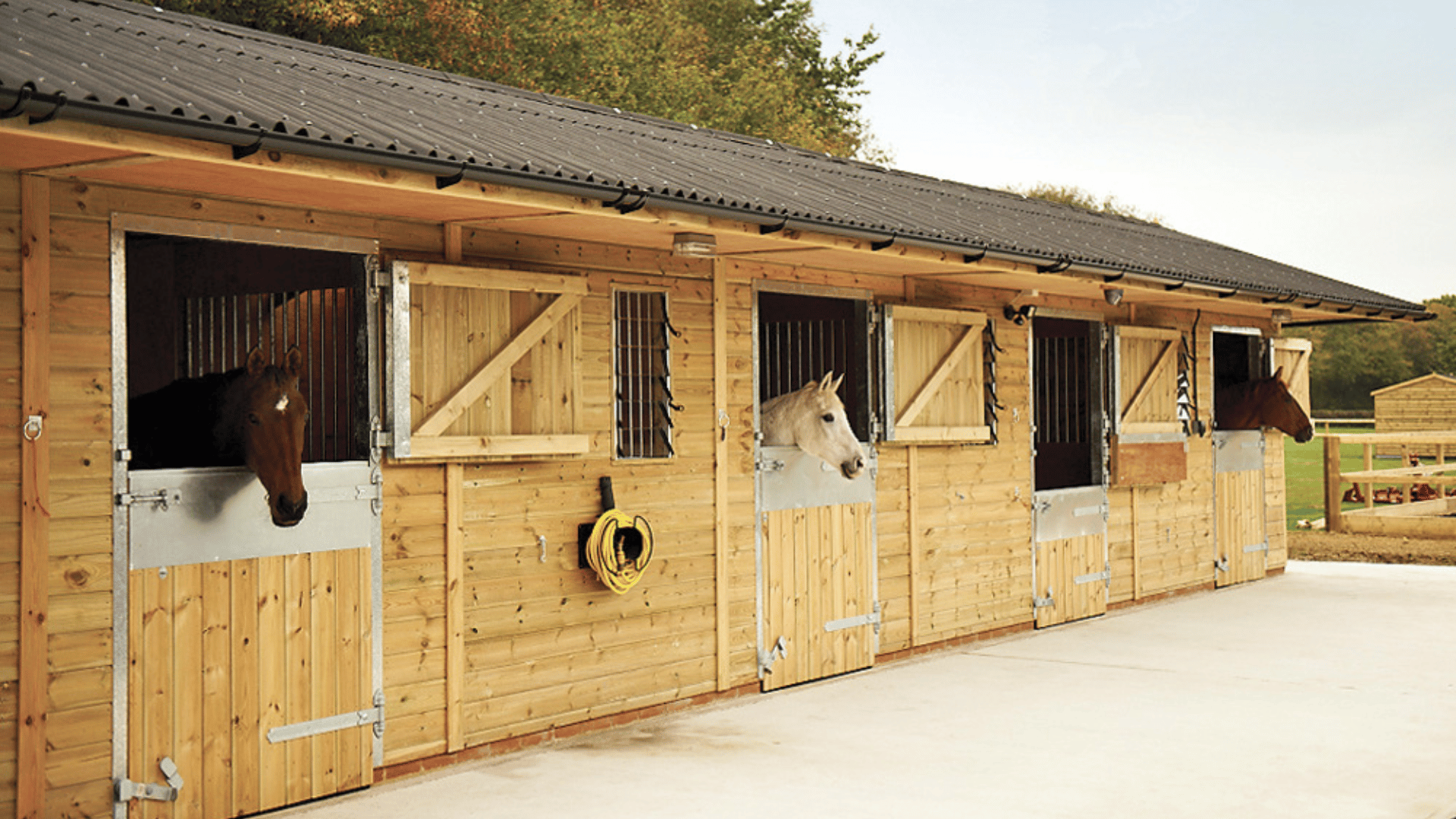
Your stable layout could be affecting your horse’s comfort more than you think.
Factors such as visibility, noise levels, and social contact can make a big difference to a horse’s day-to-day life.
In some cases, small details can even contribute to stress or behavioural changes.
Learn how stable layout may impact horse welfare with insights from Chart Stables.
Stable Orientation
The orientation of your stables can affect how comfortable your horse feels throughout the year.
For example, stables facing strong winds or driving rain will likely feel colder and draughtier in winter. On the other hand, stables with little shade or airflow can become too warm during hotter weather.
Our tip: Think about prevailing wind, shelter, sunlight, and airflow when planning your stable setup.
Visibility And Social Contact
Horses are social animals, so the ability to see other horses can influence how relaxed they feel while stabled.
For example, some horses with little social contact may become more anxious or vocal. On the other hand, others may become stressed if they are kept beside dominant or unsettled animals.
Our tip: When planning stable positions, consider each horse’s temperament and the likely social dynamics.
Noise And Activity Levels
Noise and movement around the yard can also affect how settled your horse feels.
For example, stables located near vehicle access points or machinery can expose horses to constant noise and activity. Some horses cope well with busy environments, while others may become tense or reactive.
Over time, busy environments may make it harder for some horses to relax fully while stabled.
Our tip: Try to position stables away from unnecessary disruption, where possible.
Yard Flow And Daily Routine
The way horses move through a yard can influence day-to-day management and stress levels.
For example, narrow walkways or awkward gateways can make daily routines more stressful. Some horses become restless when other horses are constantly passing their stable or leaving for turnout before them.
Our tip: When planning a stable layout, think about how horses and people will move through the yard during busy daily routines to help create a calmer environment.
Signs A Stable Layout May Not Be Working
In some cases, horses may display behaviours that suggest their yard setup does not suit them.
For example:
- Pacing or weaving while stabled
- Hesitating to enter the stable
- Showing tension around feeding or turnout times
- Calling out more frequently while stabled
- Becoming reactive around noise or movement.
Behaviour changes can have many different causes, and stable layout is only one possible factor.
However, if a behaviour happens more often during certain routines or in particular areas of the yard, it might be worth reviewing the current setup.
Bonus tip: Do not forget to think about how the yard will function in winter and wet weather. Muddy and slippery access points can create safety issues for both horses and handlers.
Stable Design Should Work For Both Horses And Owners
Stable layout should support safe and efficient daily routines while also creating a calm environment for horses to relax and rest.
Small details may seem minor, but together they can have a significant impact on how well the yard works.
Taking time to carefully plan a stable layout can help improve both horse welfare and day-to-day management.